When Seconds Matter: How Instant Digital Prescription Access Is Reshaping Emergency Care in America

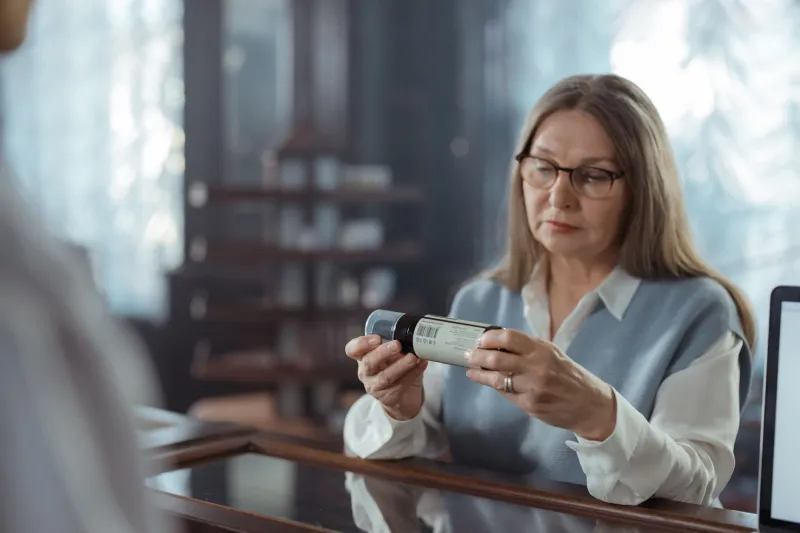
Every emergency medicine physician has a version of the same story. A patient arrives unconscious, or disoriented, or too distressed to communicate. The clinical team needs to know what medications that person is currently taking — not in twenty minutes, not after a series of phone calls to a pharmacy that closed at six o'clock, but right now. In too many American emergency departments, that information simply is not immediately available. The consequences range from delayed treatment to dangerous drug interactions that a complete prescription record would have prevented.
This is the friction point that digital prescription access — and specifically, QR code-based pharmacy management systems — is beginning to address in meaningful, measurable ways.
The Hidden Bottleneck Inside Emergency Departments
Wait times dominate the public conversation about emergency room inefficiency. Patients and policymakers focus on the hours spent in waiting rooms before a physician appears. What receives far less attention is the time lost inside the treatment process itself, once a patient has been seen, while clinicians attempt to reconstruct a complete medication picture.
According to research published in the Annals of Emergency Medicine, medication reconciliation — the process of compiling an accurate list of a patient's current prescriptions — can consume between thirty minutes and several hours in a busy emergency department. For patients who arrive with chronic conditions, multiple prescribers, or complex pharmaceutical regimens, that window extends further. During that interval, treatment decisions are made with incomplete information, or held in suspension while staff chase down records.
The downstream effects are significant. Incorrect medication administration, duplicated therapies, and missed contraindications each carry their own clinical risks. Beyond individual patient harm, the systemic delay ripples outward, contributing to the bottlenecks that affect every person waiting for care.
What a QR Code Actually Changes in a Crisis
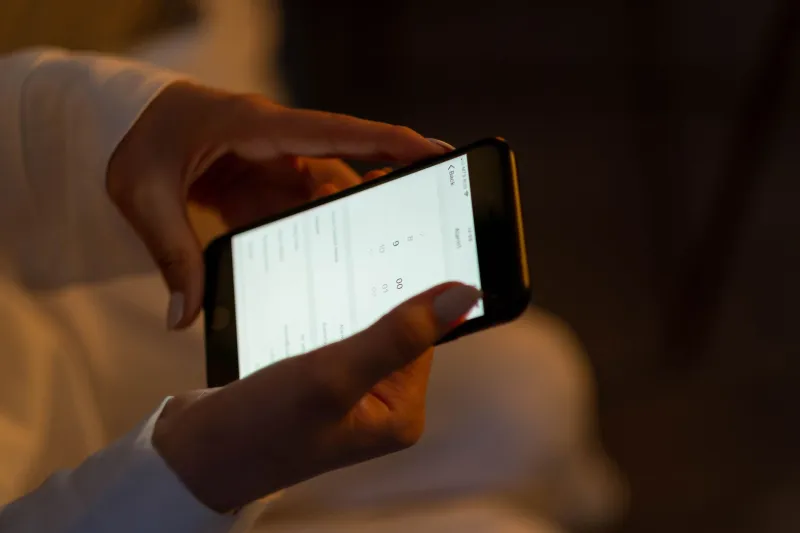
The value of a QR-enabled prescription record in an emergency context is straightforward but profound. When a patient's active prescriptions are encoded within a scannable digital record — accessible from a smartphone, a wallet card, or a wearable — the medication reconciliation process collapses from a multi-step administrative exercise into a single scan.
Consider how this plays out in practice. A sixty-three-year-old man arrives at a hospital in Atlanta following a cardiac event. He is alert but frightened, and in no condition to accurately recall the names and dosages of the seven medications he takes daily. Under a traditional paper-based system, a nurse calls his pharmacy of record, waits on hold, receives a partial list, and then attempts to reach a second pharmacy where he fills a specialty medication. Thirty to forty-five minutes pass before the clinical team has a reasonably complete picture.
With a QR-linked prescription profile, that same nurse scans a code from the patient's phone lock screen. Within seconds, a verified, timestamped list of his current prescriptions — including dosages, prescribers, and fill dates — appears on the department's workstation. The cardiologist on duty immediately identifies a blood thinner that will affect the treatment protocol. The intervention proceeds without delay.
This is not a hypothetical scenario. It reflects the kind of case that emergency medicine specialists across the country are beginning to document as digital prescription infrastructure matures.
Voices From the Emergency Medicine Community
Physicians who work in high-volume emergency departments are increasingly vocal about the clinical cost of prescription inaccessibility. Dr. Sandra Okafor, an emergency medicine attending at a regional medical center in the Midwest, describes the medication history gap as one of the most persistent and underappreciated sources of preventable harm in her field.
"We make our best clinical judgments with the information available to us," she notes. "But when that information is fragmented — when we are working from what a frightened family member remembers, or a partial pharmacy printout from two months ago — we are accepting risk that does not need to exist."
The adoption of QR-based prescription systems, in her view, represents one of the more practical near-term solutions to that risk. Unlike sweeping health information exchange initiatives that require years of interoperability negotiation between large institutions, a patient-held digital prescription record places the relevant data directly in the hands — or rather, the pocket — of the person who needs it most.
The Broader Impact on Emergency Room Throughput
The efficiency gains extend beyond individual patient outcomes. When medication reconciliation is accelerated at scale, the cumulative effect on emergency department throughput becomes measurable. A 2022 analysis by the American College of Emergency Physicians found that administrative delays, including those tied to medication verification, account for a meaningful share of the time patients spend in the department beyond their direct clinical care period.
Reducing that overhead — even by fifteen to twenty minutes per patient in cases where prescription histories are unclear — translates into faster bed turnover, reduced hallway crowding, and shorter wait times for the patients still in the waiting room. The benefits of a single technological improvement compound across the entire system.
For hospital administrators navigating the twin pressures of capacity constraints and patient satisfaction metrics, that efficiency argument carries considerable weight. Several health systems in Texas, Florida, and Ohio have begun piloting integrated QR prescription access programs in their emergency departments, with early results suggesting measurable reductions in medication-related documentation delays.
Chronic Conditions and the Emergency Room Revolving Door
Patients managing chronic illnesses — diabetes, heart failure, epilepsy, severe asthma — are disproportionately represented in emergency department visits. They are also the patients for whom prescription continuity is most critical, and for whom gaps in medication access carry the highest stakes.
For this population, a QR-linked prescription profile serves a dual function. In a crisis, it gives emergency clinicians immediate access to a treatment history that informs acute care decisions. Between crises, the same digital infrastructure supports the kind of seamless prescription management that reduces the likelihood of an emergency visit in the first place — ensuring that refills are not missed, that medication changes are accurately recorded, and that the patient's full clinical picture travels with them wherever they seek care.
This is the deeper promise of digital prescription access: not merely a faster scan in the emergency room, but a more connected, more coherent continuum of care that keeps patients out of emergency rooms more often.
Moving Toward a Standard of Care
The technology exists. The clinical case is well established. What remains is the broader adoption that transforms a promising tool into a standard feature of American healthcare delivery.
For patients, the immediate step is engagement — understanding what digital prescription management tools are available through their pharmacy, their insurer, or their primary care provider, and taking the straightforward action of consolidating their prescription records into an accessible, shareable format. A QR code that lives on a phone or a printed card costs nothing to maintain and may, in the right moment, be the piece of information that changes a clinical outcome.
For the healthcare system, the imperative is integration — ensuring that emergency departments are equipped to receive and act on digital prescription data, and that the infrastructure connecting pharmacies, prescribers, and emergency facilities continues to develop with patient safety as its organizing principle.
In emergency medicine, the phrase "time is tissue" is used to convey the biological urgency of rapid intervention. When prescription access is the bottleneck, time is also information — and information, delivered instantly through a scan, is increasingly the difference between a dangerous delay and care delivered at the speed that a crisis demands.