Scanning Away the Risk: How QR Code Technology Is Making American Pharmacies Safer
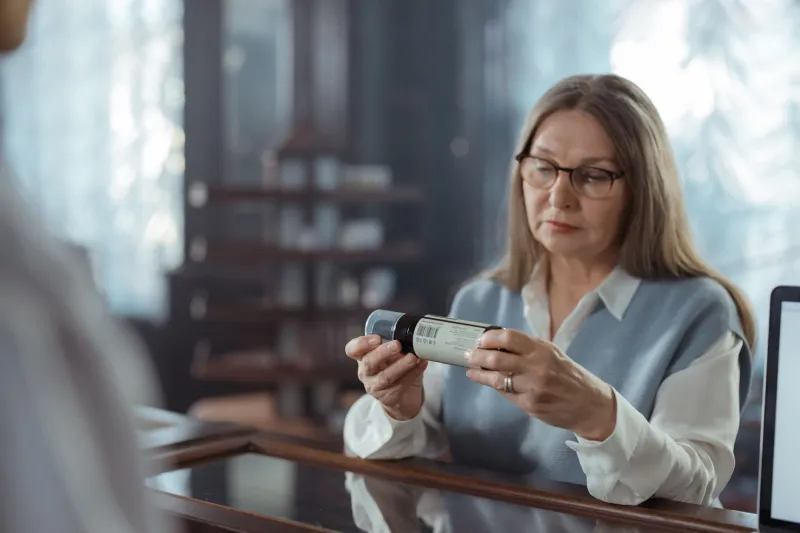
Every year, an estimated 7,000 to 9,000 Americans die as a direct result of medication errors, according to the National Institutes of Health. Tens of thousands more experience serious adverse events that require emergency intervention. These are not abstract statistics — they represent patients who received the wrong drug, the wrong dose, or the wrong instructions because the systems designed to protect them fell short. As digital health infrastructure continues to evolve, QR code prescription management is proving to be one of the most consequential upgrades American pharmacies have made in decades.
The Hidden Fragility of Traditional Prescription Systems
For most of the twentieth century, prescriptions traveled from physician to pharmacist as handwritten notes — a system that depended entirely on legibility, attentiveness, and the absence of human fatigue. The shift toward electronic prescribing, or e-prescribing, reduced some of those risks but introduced new ones. Data entry errors, software incompatibilities between hospital systems and pharmacy platforms, and the absence of real-time verification checkpoints have all contributed to ongoing medication mix-ups.
A 2020 study published in the Journal of the American Pharmacists Association found that approximately one in every 250 prescriptions processed in community pharmacies contained a clinically significant error. In a country where more than four billion prescriptions are filled annually, that fraction translates into an enormous volume of potential harm.
The core problem is not negligence — it is architecture. Traditional systems, even digital ones, often lack a mechanism that independently confirms the prescription's contents at multiple stages of the dispensing process. That is precisely the gap that QR code technology is designed to close.
How QR Code Verification Creates a Safety Net
At PharmacyQR, the premise is straightforward: your prescriptions should be one scan away from accurate, verified, and ready to dispense. But the technical reality behind that simplicity is remarkably sophisticated.
When a physician generates a QR-coded prescription, the code encodes a structured data payload that includes the patient's identifying information, the drug name (using standardized nomenclature), dosage, administration route, refill authorization, and a cryptographic signature that confirms the prescription's authenticity. This is not a static image — it is a dynamic, verifiable document.
At the pharmacy counter, scanning that code does several things simultaneously. It pulls the prescription data directly into the dispensing software, eliminating manual transcription. It cross-references the patient's medication history to flag potential drug interactions. It confirms that the prescribing physician holds a valid, active DEA registration. And it creates a timestamped audit trail that documents every action taken with that prescription.
Each of those steps represents a verification checkpoint that a paper prescription or a basic e-prescription simply cannot replicate at the same speed or reliability.
Early Adopters Are Seeing Measurable Results
Several pharmacy networks across the United States have begun integrating QR-based prescription workflows, and the preliminary outcomes are encouraging.
A regional pharmacy chain in the Midwest that piloted QR code dispensing across twelve locations reported a 34 percent reduction in dispensing errors over an eighteen-month period. The chain's director of pharmacy operations noted that the most significant improvements came in two specific error categories: wrong-strength dispensing and patient identity mismatches — both of which had historically been the most difficult to catch before a prescription left the counter.
In a separate case study conducted at a hospital-affiliated outpatient pharmacy in the Southeast, pharmacists found that QR verification reduced the average prescription processing time by nearly four minutes per transaction. That efficiency gain, compounded across hundreds of daily transactions, freed up pharmacist time for the kind of patient counseling that further reduces misuse and confusion.
Independent pharmacies have also reported that QR-coded prescriptions reduce the volume of callback calls to prescribers — a time-consuming step that is often triggered by illegible handwriting or ambiguous dosage instructions. When the data is encoded rather than transcribed, ambiguity largely disappears.
The Role of Standardization in Scaling Safety
One of the challenges facing broader adoption is the absence of a single national standard for QR prescription encoding. Different health systems and pharmacy platforms currently use varying data schemas, which can create compatibility gaps when a patient fills a prescription at an unfamiliar location.
Industry groups including the National Council for Prescription Drug Programs (NCPDP) have been working toward interoperability frameworks that would allow QR-coded prescriptions to be read and verified by any compliant pharmacy system regardless of vendor. Progress has been steady, and several states have begun incorporating QR prescription standards into their pharmacy practice regulations.
For patients, the practical implication is significant. A truly standardized QR prescription system means that whether you fill your medication at your neighborhood pharmacy, a hospital outpatient clinic, or a mail-order service while traveling, the verification process remains consistent and complete.
What Patients Should Know Right Now
For Americans who are currently managing prescriptions — for themselves or for family members — it is worth asking your prescriber and your pharmacy whether QR-coded prescriptions are available through their current systems. Adoption is growing, and many providers are further along in implementation than patients realize.
When a pharmacy uses QR-based dispensing, patients can expect a slightly different interaction at the counter: a brief scan rather than a manual lookup, and in many cases, a faster, more accurate transaction. If you use a pharmacy app or patient portal, check whether it supports QR prescription generation — this is increasingly common among larger pharmacy chains and integrated health systems.
The broader point is this: medication safety is not solely the responsibility of your pharmacist or your physician. The systems those professionals use either support or undermine their ability to protect you. QR code prescription technology is one of the clearest examples of infrastructure working in the patient's favor — quietly, efficiently, and at the moment it matters most.
A Safer Standard for American Pharmacy
The American pharmacy system dispenses an extraordinary volume of medication every single day. The margin for error within that system has historically been wider than it should be — not because of carelessness, but because the tools available were not built for the complexity of modern pharmaceutical care.
QR code prescription management does not eliminate every possible point of failure. Human judgment remains essential, and technology is only as effective as its implementation. But as a verification layer, as a data integrity mechanism, and as a patient safety checkpoint, scanning-based prescription systems represent a meaningful and measurable improvement over what came before.
At PharmacyQR, that improvement is not a future aspiration — it is the operational foundation. Your prescriptions, verified and protected, one scan away.