Counterfeit, Unverified, and Dangerous: The Shadow Economy Thriving Inside America's Prescription Gap
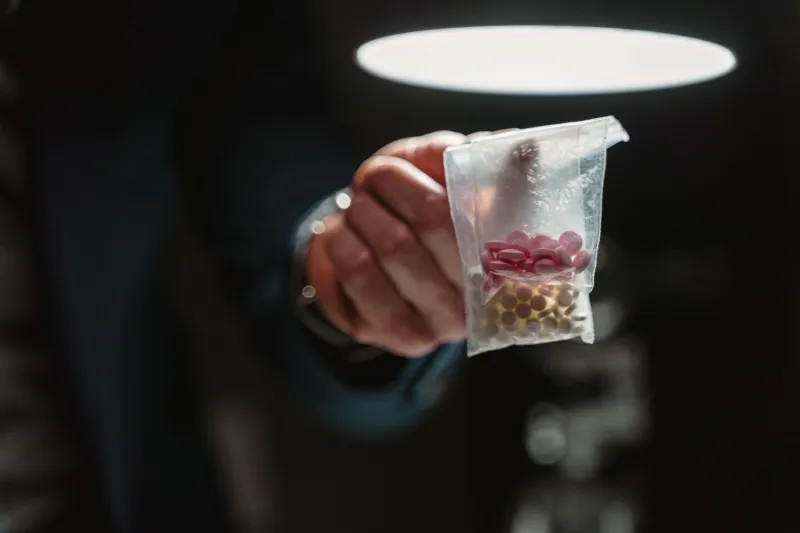
A Market That Thrives in the Gaps
Every year, federal agencies intercept shipments of counterfeit pharmaceuticals worth hundreds of millions of dollars at American borders. Yet for every package seized, an untold number pass through undetected, eventually finding their way into medicine cabinets, gym bags, and kitchen drawers across the country. The problem is not simply one of criminal enterprise. It is, in large part, a problem of infrastructure — specifically, the absence of a unified, verifiable system that allows any party in the medication supply chain to confirm that a prescription is legitimate before a drug changes hands.
The underground prescription economy in the United States is not a monolithic operation run by shadowy cartels alone. It is a fragmented, opportunistic market sustained by ordinary systemic failures: disconnected pharmacy records, paper prescriptions that can be altered or duplicated, and digital platforms that lack any meaningful authentication layer. When a patient cannot easily access their own verified medication history, and when a pharmacy cannot instantly cross-reference a prescription against a centralized record, the door opens wide for exploitation.
How Counterfeit Drugs Enter the Supply Chain
The pathways through which illegitimate medications reach American consumers are more varied than most people realize. Some enter through unregulated online pharmacies — websites that present the visual language of legitimacy while operating entirely outside the jurisdiction of state pharmacy boards or the Food and Drug Administration. Others arrive through peer-to-peer transactions, social media platforms, and encrypted messaging applications where buyers and sellers negotiate with no pharmacist, no physician, and no verification mechanism in the loop.
Counterfeit drugs represent a particularly acute danger within this ecosystem. The FDA has documented cases in which tablets sold as legitimate brand-name medications contained fentanyl, methamphetamine, or entirely inert substances. In other instances, genuine medications have been repackaged with fraudulent lot numbers and expiration dates, making them indistinguishable to the untrained eye. Without a way to trace a medication's origin back to a verified, digitally authenticated prescription, consumers have no reliable means of confirming what they are actually ingesting.
The consequences are not abstract. Poisoning incidents, overdose deaths, and treatment failures linked to counterfeit pharmaceuticals have been documented across nearly every state. The victims are not limited to individuals who knowingly sought out illicit sources. Some are patients who believed they were using a legitimate mail-order service or purchasing a refill through what appeared to be an authorized channel.
The Role of Fragmented Records in Enabling the Underground Market
One of the least-discussed enablers of the prescription black market is the fragmentation of American medical records. When a patient's prescription history exists across half a dozen unconnected systems — a hospital's electronic health record, a retail pharmacy chain's internal database, an insurance company's claims file — no single point of verification exists. A fraudulent prescription, whether forged on paper or fabricated digitally, can circulate through this fragmented landscape without triggering any meaningful alert.
This fragmentation also affects consumers directly. Patients who lack ready access to their own verified prescription records are more vulnerable to manipulation by illegitimate sellers who offer plausible-sounding documentation. Without a clear, authenticated record of what a physician actually prescribed, patients have limited ability to verify whether a medication they are receiving corresponds to what was actually ordered on their behalf.
Pharmacy benefit managers, state prescription drug monitoring programs, and federal regulators have each developed partial solutions to this problem. But partial solutions, operating in isolation, have not been sufficient to close the gap that the underground market exploits.
What Verification Technology Could Change
The emergence of QR code-based prescription verification represents one of the most promising structural responses to this challenge. When a prescription is issued with an embedded, encrypted QR code that links to a centralized, authenticated record, several things become possible that are not possible with paper or fragmented digital alternatives.
First, a pharmacist — or, in principle, a patient — can scan the code and confirm in real time that the prescription is genuine, that it was issued by a licensed provider, and that it has not already been filled or transferred. This single capability would eliminate a significant proportion of the prescription fraud that currently goes undetected at the point of dispensing.
Second, QR-linked prescription records create an auditable chain of custody. Every scan generates a timestamped entry that can be reviewed by authorized parties, including pharmacists, physicians, and law enforcement investigators. Counterfeit medications, by definition, cannot produce a valid scan result against a centralized authentication database. The absence of a verifiable scan becomes, itself, a red flag.
Third, and perhaps most importantly for consumer safety, verified digital prescription systems give patients an active role in their own protection. A patient who receives a medication through any channel — traditional retail pharmacy, mail-order service, or otherwise — could, in principle, scan the associated prescription record and confirm its authenticity before taking the medication. This shifts the verification burden away from reliance on institutional oversight alone and places a meaningful tool directly in the hands of the individual.
The Regulatory and Industry Landscape
The Drug Supply Chain Security Act, enacted in 2013, established a framework for electronic drug tracing that requires manufacturers, distributors, and dispensers to maintain interoperable records of prescription drug transactions. Full implementation of this framework has been phased in over many years, with the FDA's final rule on enhanced drug distribution security taking effect in 2023. These requirements apply primarily to the licensed supply chain, however. They do not address the peer-to-peer and unregulated online channels through which much of the underground market operates.
State prescription drug monitoring programs provide another layer of oversight, requiring pharmacies to report dispensing data that can be used to identify suspicious prescribing or filling patterns. But these programs vary significantly in their scope, their interoperability with programs in neighboring states, and their ability to detect activity that occurs outside licensed pharmacy channels entirely.
The gap between what regulated systems can see and what the underground market actually does remains substantial. Technology alone cannot close it entirely — enforcement, consumer education, and regulatory coordination are all essential components of any serious response. But the absence of a universal, scannable verification standard for prescriptions continues to leave the market structurally vulnerable in ways that are difficult to defend.
What Consumers Can Do Right Now
For patients navigating this landscape, several practical steps can reduce exposure to counterfeit or unverified medications. Using only state-licensed pharmacies, verifiable through the National Association of Boards of Pharmacy's online database, is a foundational precaution. Avoiding online pharmacies that do not require a valid prescription or that offer prices dramatically below market rates is equally important — both are reliable indicators of illegitimate operation.
Maintaining a personal, organized record of all active prescriptions, including the prescribing physician, the dispensing pharmacy, and the associated medication details, makes it easier to identify discrepancies if a medication appears unfamiliar or inconsistent with what was prescribed. Digital prescription management platforms that support QR-based verification provide an additional layer of confidence, particularly for patients managing multiple medications across different providers.
The underground prescription market persists because the systems designed to prevent it are incomplete. Closing that gap will require sustained commitment from regulators, healthcare institutions, and technology developers alike. In the meantime, the most effective protection available to individual Americans is an informed, skeptical, and organized approach to every medication that enters their home.